
耐腐蚀性
Corrosion resistance
腐蚀 Corrosion
“腐蚀”是指金属与氧气等物质反应生成化合物的现象。为了防止腐蚀,必须保护金属表面免受氧气及其他腐蚀性因素的侵害,这种保护行为称为“防腐蚀”。在众多表面处理方式中,化学镀镍因其优异的防护能力,长期以来被认为是具备高耐腐蚀性的处理技术之一。
我们从以下两个角度来解析化学镀镍的耐腐蚀性能:
1)致密性屏障(严谨性)
化学镀层的致密程度直接影响其防护能力。镀层表面针孔越少、越不易渗透,腐蚀因子就越难以穿透至基材,从而形成更加有效的物理屏障。因此,致密且均匀的化学镀镍层是实现耐腐蚀性的关键。
2)化学稳定性(耐化学性)
即便镀层结构致密,若其本身无法抵抗酸、碱或有机溶剂的侵蚀,也会逐渐失去防腐作用。在极端化学环境中,涂层的溶解或破坏将导致基材暴露,腐蚀随之发生。因此,涂层在各种腐蚀介质中的稳定性和溶解度是评估其耐腐蚀性能的重要指标。
Two aspects of its corrosion resistance:
密度 Density
中性盐雾试验是评估表面处理(如电镀)耐腐蚀性能的一种常用方法。该测试通过在特定温度条件下,将样品暴露于含有5%氯化钠(NaCl)浓度的盐雾环境中,以加速腐蚀过程。腐蚀程度通常通过“额定值法”进行评估,依据腐蚀点数量及腐蚀面积所占比例进行分级。
评级范围为0至10:
•等级10 表示完全无腐蚀,代表极佳的耐腐蚀性; •等级0 表示腐蚀面积达到或超过50%,耐腐蚀性能最差。 •
该方法为表面处理效果提供了直观且可量化的评估依据。
It offers an intuitive, quantifiable evaluation.
盐雾测试:
1)Ni-P、中磷
材质:SPCC
薄膜厚度 | 考试时间 | 无需热处理 | 200°C | 300°C |
10微米 | 3 小时 | 10 | 10 | 8 |
24 小时 | 10 | 10 | 6 | |
48 小时 | 10 | 10 | 5 | |
100 小时 | 10 | 10 | 5 | |
30微米 | 3 小时 | 10 | 10 | 10 |
24 小时 | 10 | 10 | 8 | |
48 小时 | 10 | 10 | 8 | |
100 小时 | 10 | 10 | 8 |

上图依次展示了中磷镀层试件在200°C热处理后,经过盐雾试验3小时、24小时、48小时和100小时的外观变化。结果显示:即使经过100小时盐雾测试,化学镀镍层依然未出现生锈现象,仅表现出轻微的颜色变化,充分体现了其优异的耐腐蚀性能。
Images above show medium-phosphorus plating (200°C heat-treated) after 3h, 24h, 48h and 100h salt spray tests. Even after 100h, no rust—only slight discoloration—proving excellent corrosion resistance.
2)Ni-P/PTFE、中磷
材质:SPCC
薄膜厚度 | 考试时间 | 无需热处理 | 200°C | 300°C |
10微米 | 3 小时 | 10 | 10 | 10 |
24 小时 | 10 | 10 | 9.3 | |
48 小时 | 10 | 10 | 9.3 | |
100 小时 | 10 | 9.8 | 7 | |
30微米 | 3 小时 | 10 | 10 | 10 |
24 小时 | 10 | 10 | 9.8 | |
48 小时 | 10 | 10 | 9.5 | |
100 小时 | 10 | 10 | 9.3 |

上图展示了Kaniflon S型化学镀层试件(厚度10μm)在200°C热处理后,分别经过盐雾测试3小时、24小时、48小时和100小时的外观变化。从结果可见,即使经过100小时的盐雾测试,Kaniflon S型镀层仍未出现生锈现象,仅有轻微变色,充分体现出其出色的耐腐蚀性能。
Images above show Kaniflon S coating specimens (10μm thick, 200°C heat-treated) after 3h, 24h, 48h and 100h salt spray tests. Even after 100h, no rust—only slight discoloration—proving excellent corrosion resistance.
3)Ni-P-B、低磷
材质:SPCC
薄膜厚度 | 考试时间 | 无需热处理 | 200°C | 300°C |
10微米 | 3 小时 | 10 | 10 | 10 |
24 小时 | 9.5 | 9.5 | 10 | |
48 小时 | 9.3 | 9.5 | 9 | |
100 小时 | 8 | 9.3 | 8 | |
30微米 | 3 小时 | 10 | 10 | 10 |
24 小时 | 9.5 | 9.5 | 9.8 | |
48 小时 | 9.3 | 9.3 | 9 | |
100 小时 | 8 | 8 | 8 |

上图从左到右依次展示了Ni-P-B镀层试件(厚度10μm)在200°C热处理后,分别经过盐雾测试3小时、24小时、48小时和100小时的外观变化。即使在100小时的盐雾测试中,经过200°C热处理的镀层产品也开始出现类似锈蚀的痕迹,显示其耐腐蚀性略逊一筹。
Images above (left to right) show Ni-P-B coating specimens (10μm thick, 200°C heat-treated) after 3h, 24h, 48h and 100h salt spray tests. By 100h, rust-like marks appeared, indicating slightly inferior corrosion resistance.
从以上结果可以看出,在镀层较厚且经200°C热处理的条件下,可获得最佳的耐腐蚀性能。此外,较薄的镀层在热处理后,结合其致密的镀层结构,也展现出优异的防护效果(10μm和30μm的薄膜在200°C以下几乎无明显差异,耐腐蚀等级均为10级)。
镀膜之间耐腐蚀性的差异,主要源于以下几个因素:
1. 基材结构差异
Ni-P-B镀层形成的结构为微晶,Kaniflon S为无定形结构。
2. 热处理过程中的结构演变
3. 合金成分及复合材料添加
部分镀层采用了复合技术(如添加碳、磷、硼、PTFE、钨等),形成Ni-P复合镀层,这类材料通常具备更高的耐腐蚀性能。
此外,镀膜的致密性(即“严密性”)同样是影响耐腐蚀性能的重要因素。尤其是采用化学镀方式时,其结构均匀且致密,因此能实现出色的耐腐蚀保护效果。
Results show best corrosion resistance with thicker coatings heat-treated at 200°C. Even thinner coatings, with dense structure after heat treatment, perform well—10μm and 30μm films show little difference below 200°C, both rating 10 for corrosion resistance. Corrosion resistance differences between coatings stem mainly from: 1. Substrate structure: Ni-P-B (microcrystalline) vs. Kaniflon S (amorphous). 2. Structural changes during heat treatment. 3. Alloy composition and composite additives: Coatings with composites (e.g., carbon, phosphorus, boron, PTFE, tungsten) forming Ni-P composites often have higher resistance. Coating density also matters. Electroless plating, with uniform, dense structure, provides excellent corrosion protection.
耐化学性 Chemical resistance
无论化学镀镍涂层多么致密、具备多强的屏障性能,一旦处于其自身也会被腐蚀或溶解的化学环境中,其原有的高耐腐蚀性将难以维持。因此,在评估化学镀镍的耐腐蚀性能时,实际使用环境是一个不可忽视的重要因素。
作为参考,以下为化学镀镍在不同化学药品中的耐化学性评估结果。
No matter how dense or effective an electroless nickel coating is as a barrier, its high corrosion resistance fails if the chemical environment corrodes or dissolves it. Thus, the actual service environment is crucial when evaluating its corrosion resistance.
For reference, below are results of its chemical resistance in various chemicals.
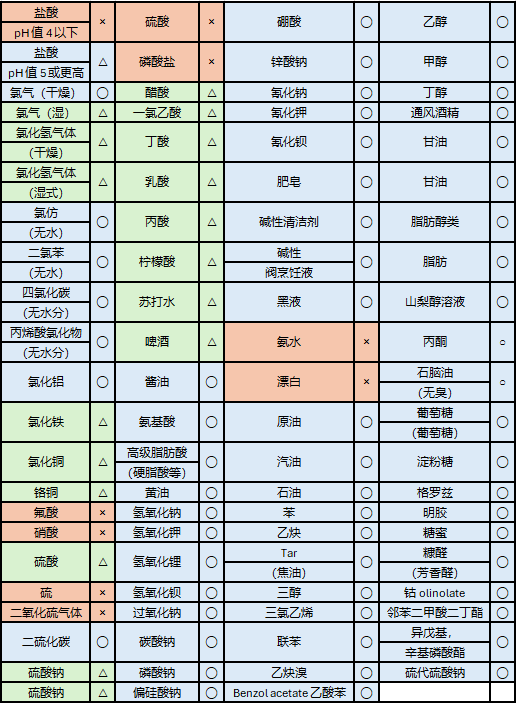
注意事项 Notes
1.耐化学性评估标识说明:
◯:适合使用 △:视具体条件可使用 ×:不可使用 2.若材料本身存在缺陷,镀层在缺陷及其周围区域的耐腐蚀性将显著下降。
1. Chemical resistance labels: ◯: Suitable for use △: Usable under specific conditions ×: Not usable 2. If the material itself has defects, corrosion resistance of the coating at and around defects will drop significantly.
如果使用环境中涉及到如上表所示的化学品,通过在材料表面进行化学镀镍处理,通常可以获得良好的防腐蚀效果。
需要注意的是,即便在评估中被标注为“△”或“×”的化学品环境中,若腐蚀因子以液态形式存在,镀膜仍有较高的溶解风险;但当腐蚀因子以气态形式存在时,化学镀镍在许多情况下依然能展现出优异的耐腐蚀性能——这种情况在卤素类化学品中尤为常见。
若您在耐腐蚀方面存在难题,欢迎参考以上信息作为初步判断依据,我们也乐意为您提供进一步的技术支持。
For environments involving chemicals listed above, electroless nickel plating on materials generally provides good corrosion protection. Note: For chemicals marked "△" or "×", liquid corrosive agents pose higher dissolution risks to the coating; but gaseous ones—especially halogens—often see the plating retain excellent corrosion resistance. For corrosion resistance challenges, use the above as a preliminary guide. We’re happy to offer further technical support.