Surface treatment · process selection
Special substrates · neutral Ni-P system
Room-temperature electroless nickel
Neutral low-temperature Ni-P system
This process is a neutral Ni-P system that can plate at relatively low temperatures, suitable for substrates such as glass, ceramics and pottery. The coating has low deformation and good adhesion, with single-solution make-up and single-batch use, easing process selection around substrate and temperature conditions.
Applicable substrates listed in the instructions
Neutral Ni-P system
Operating temperature range
Process scenario & substrate references
From the plating scene to glass and ceramic workpieces
The first image is a user-provided concept image of the process scene; the other two show related substrate forms. Actual adhesion and plating results must be verified on the specific workpiece and pretreatment.
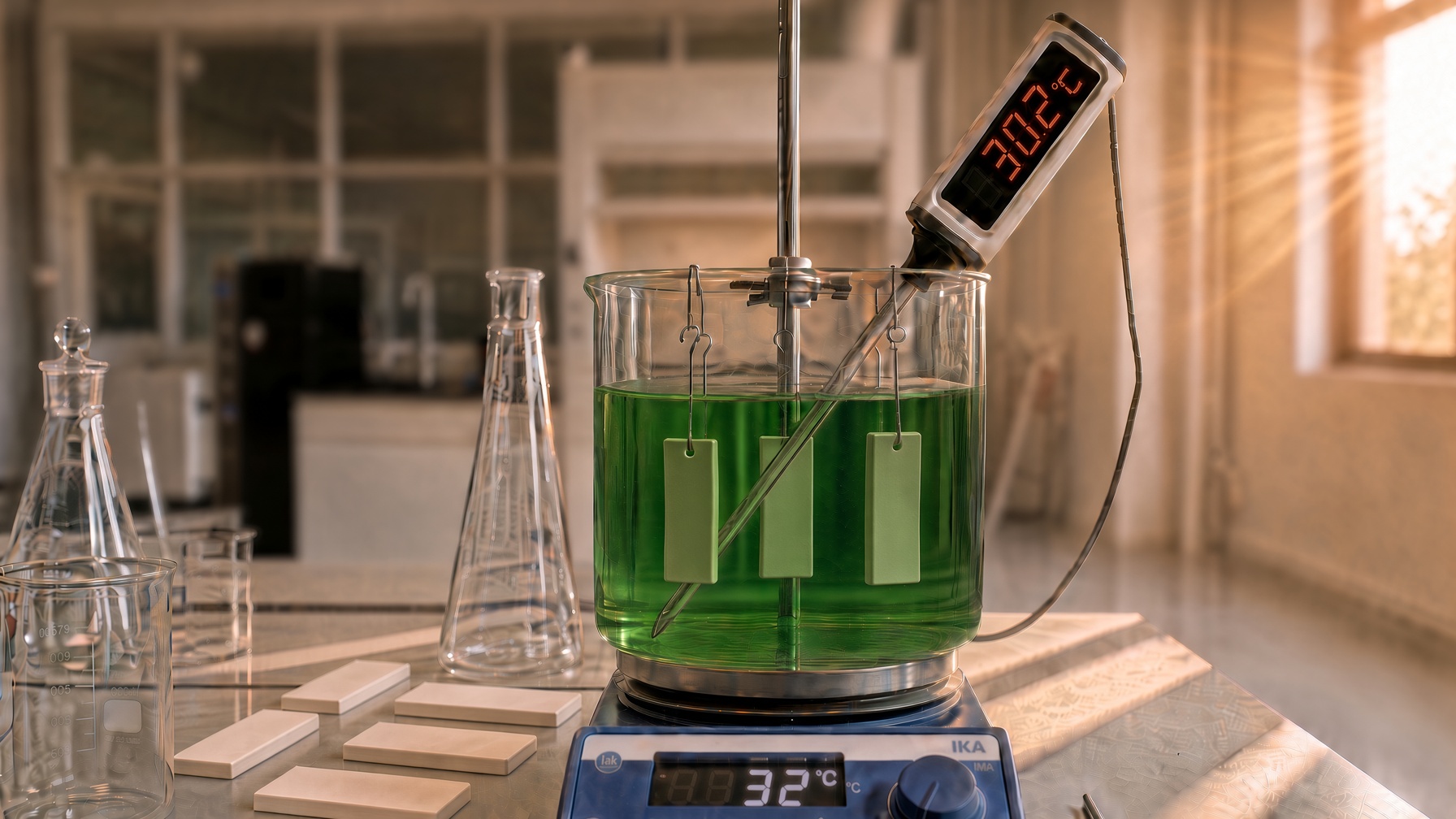
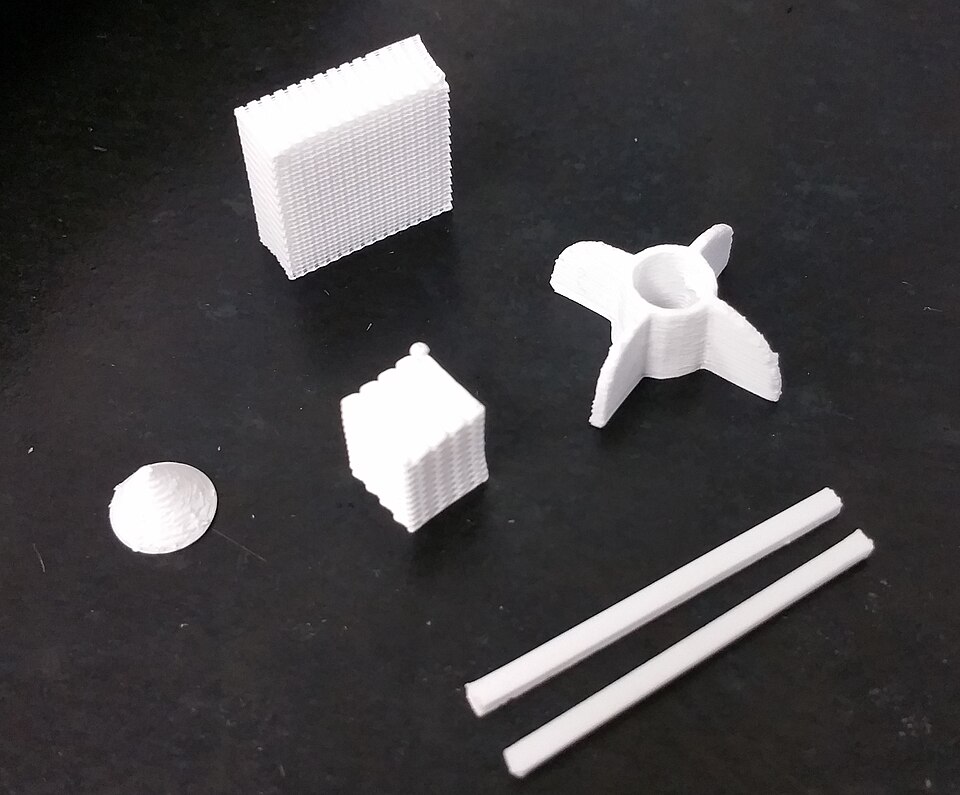
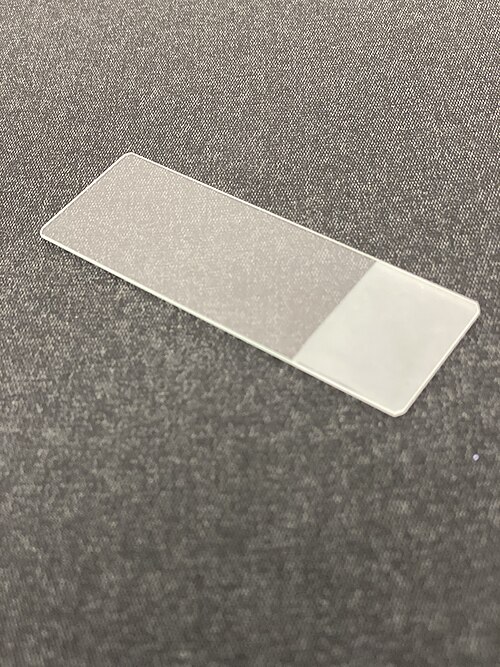
The first image is a concept illustration; the other two are substrate references not plated with this process. None are site photos or test results.
1 / Process features
Selection around special substrates
Confirm suitable plating conditions with substrate, allowable temperature and target thickness.
Substrate compatibility
Glass & ceramic applications
Low coating deformation, good adhesion
Suitable for substrates such as glass, ceramics and pottery. When selecting, focus on substrate surface condition, pretreatment and adhesion on actual workpieces.
- The instructions explicitly cover glass, ceramics and pottery.
- Low coating deformation and good adhesion.
Ni-PNi-P alloy coating
Temperature selection
Supports low-temperature plating
Evaluate temperature and deposition rate together
Operating temperature covers 30–90℃. The instructions give the temperature–rate relationship for a fresh bath, which can be evaluated against workpiece temperature requirements and plating time.
- At 30℃, the fresh-bath plating rate is 1.25 μm/h.
- At 90℃, the fresh-bath plating rate is 30±2 μm/h.
30–90℃Different temperatures give different plating rates
Production method
Single-solution make-up
Single-batch use, easy to manage
Uses single-solution make-up and is a single-batch electroless nickel chemical. Arrange batches with plating area, thickness and bath consumption.
- Bath made up with a single chemical component.
- Single-batch use, easy to manage.
Neutral systempH 7.00±0.10
2 / Performance parameters
Use clear process conditions as reference
"Neutral" and "low-temperature" refer to pH and operating temperature respectively and should be evaluated together with the specific substrate.
On narrow screens, swipe left and right to see all parameters →
| Item | Parameter | Conditions & notes |
|---|---|---|
| Coating system | Ni-P | Neutral Ni-P system |
| Applicable substrates | Glass, ceramics, pottery, etc. | Confirm adhesion with pretreatment and actual workpieces |
| Coating features | Low deformation, good adhesion | Qualitative description from the instructions; adhesion and deformation are verified per workpiece |
| pH | pH 7.00±0.10 | Operating conditions |
| Operating temperature | 30–90℃ | Plating rate varies with temperature |
| Deposition rate | 30±2 μm/h | Fresh bath, 90℃ |
| Nickel sulfate concentration | 20±2 g/L | Nickel sulfate hexahydrate NiSO₄·6H₂O; not the metallic nickel concentration |
| Usage | Single-solution make-up, single-batch use | One-batch process described in the instructions |
- The deposition rate at 90℃ cannot represent low-temperature plating speed; see the table below for data at different temperatures.
- The above is for process selection and does not replace the full operating instructions.
3 / Temperature & plating rate
Evaluate plating rate by workpiece temperature requirements
All data below are fresh-bath data. Low-temperature plating requires evaluating processing time against the target thickness.
On narrow screens, swipe left and right to see all parameters →
| Temperature | Deposition rate | Data conditions |
|---|---|---|
| 30℃ | 1.25 μm/h | Fresh bath |
| 35℃ | 1.65 μm/h | Fresh bath |
| 40℃ | 2.15 μm/h | Fresh bath |
| 50℃ | 3.75 μm/h | Fresh bath |
| 60℃ | 6.90 μm/h | Fresh bath |
| 70℃ | 12.2 μm/h | Fresh bath |
| 80℃ | 19.0 μm/h | Fresh bath |
| 90℃ | 30.0 μm/h | Fresh bath; the operating conditions table separately lists 30±2 μm/h |
The above data is the temperature–rate relationship from the instructions and does not represent a sustained guarantee at any bath age or workpiece condition.
4 / Application selection
Start with substrate and temperature conditions
Provide the substrate, target thickness and allowable temperature to help confirm a suitable evaluation plan.
Glass, ceramics & pottery
Focus on coating adhesion, substrate compatibility and temperature conditions.
Evaluation direction: neutral electroless nickel for glass & ceramics
Confirm pretreatment according to substrate and surface condition, then verify on actual workpieces.
Temperature-limited plating needs
Focus on allowable temperature, target thickness and processing time.
Evaluation direction: matching temperature and plating rate
First confirm the workpiece temperature limit, then evaluate plating conditions with fresh-bath data.
Other functional coatings
Find the corresponding alloy system by target function.
For the Ni-P-W system for metal thin-film resistors, see Ni-P-W for thin-film resistors.
Selection summary
Start from substrate compatibility, then choose the plating temperature.
Room-temperature electroless nickel targets substrates such as glass, ceramics and pottery, meeting neutral, low-temperature plating and adhesion needs. Set the evaluation range by allowable temperature and confirm the process with target thickness and actual workpieces.
5 / FAQ
Distinguish pH from phosphorus content
Is "neutral electroless nickel" the same as "mid-P electroless nickel"?
"Neutral" refers to bath pH; room-temperature electroless nickel operates at pH 7.00±0.10. "Mid-P" describes the phosphorus content of the deposited coating. This process is selected for special substrates such as glass and ceramics, and bath pH cannot be used to infer the coating's phosphorus classification.
Can it reach 30 μm/h at low temperatures too?
30±2 μm/h corresponds to fresh bath at 90℃. The instructions list a fresh-bath rate of 1.25 μm/h at 30℃; plating time must be evaluated at the chosen temperature.
Is it suitable for all substrates?
The instructions list it as suitable for glass, ceramics, pottery and similar; metals that act as catalytic poisons such as bismuth, cadmium, antimony, tin, lead, solder and zinc are not suitable. Specific workpieces should be confirmed with substrate composition and pretreatment.
Confirm a room-temperature electroless nickel solution with an engineer
Please provide the substrate, target thickness, adhesion requirements and allowable temperature; for parts plating, also specify quantity and drawing requirements.