Surface treatment · process selection
HIGH PHOSPHORUS / ELECTROLESS NICKEL
High-phosphorus electroless nickel
Different formulations, selected separately.
From coating performance to production conditions.
Focusing on corrosion resistance, functional coatings and continuous production needs, learn the process features, make-up ratios and management methods of each product. Choose the right high-phosphorus solution based on substrate, target thickness and service environment.
Standard Ni-P alloy coating
HIGH PHOSPHORUS
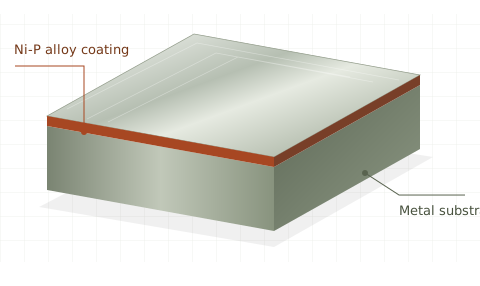
Each keeps its own features and components
Deposition rate, hardness and phosphorus content each have their own basis
With substrate, thickness and actual environment
Related process / cross-range selection
Temperature-adjustable type
Temperature-adjustable electroless nickel · note on the high-P range
This site's existing classification is 10–13% for high-P and 5–10% for mid-P. The charted phosphorus content of this process is about 9–10.5 wt%, varying with test temperature and spanning the mid-P/high-P boundary.
High-P conditions must correspond to specific temperatures and measured composition.
Within the data's test window of pH 6.00, nickel sulfate 25.0 g/L and 70–90℃, raising temperature increases deposition rate and lowers phosphorus content and internal stress. Conditions near or above 10% can be evaluated for high-P needs, but the whole temperature window cannot be classified as high-P.
Full parameters for the temperature-adjustable type and its 300℃ × 1 h heat-treated hardness are on the mid-P page. This process does not borrow the corrosion data or salt spray durations of other formulations on this page.
Phosphorus content is an approximate reading from the curve on p.3 of the temperature-adjustable type technical data (2008.01); deposition rate, stress and hardness are on pp.2, 4 and 5. This site's classification follows the existing Ni-P data definitions.
01 / Product differences
Each has its own focus,
and its own process conditions.
The performance and formulation of the four processes correspond separately. The high-P adjusted type uses a standard Ni-P high-phosphorus adjustment, with its beaker test conditions kept separately.
High-P continuous type
Obtains a high-phosphorus coating by raising the make-up ratio, combining corrosion, wear and chemical resistance; suits process selection focused on continuous production and day-to-day bath management.
- Two-component make-up, supports automatic analysis and replenishment.
- Operating pH 4.80±0.10, operating temperature 85–95℃.
- Selected to high-P specification; actual composition is confirmed with process conditions.
12±2 μm/hFresh bath · 87℃
High-P functional type
For engineering and functional coating needs, with a lead- and cadmium-free formulation. The instructions list a dense coating, compressive stress, non-magnetic properties and good solderability, and provide phosphorus content and hardness data.
- Coating phosphorus content 10.6%–12% (mass fraction).
- As-plated hardness approx. 500 HV; approx. 950 HV after 400℃ × 1 h.
- ASTM B117 neutral salt spray data value of 1000 h under specific conditions; see notes below for applicable conditions.
6–12 μm/h88℃ · pH 4.9
High-P corrosion-resistant type
Clearly positioned as a high-phosphorus, highly corrosion-resistant continuous electroless bath with a lead-free formulation, also meeting wear and chemical resistance needs. Make-up and replenishment agents are separate, easing continuous production management.
- Two-component make-up, supports automatic analysis and replenishment.
- Operating pH 4.50±0.10, operating temperature 85–94℃.
- For high-P corrosion applications; corrosion acceptance requirements are set per workpiece.
10±2 μm/hFresh bath · 86℃
High-P adjusted type
Based on a standard Ni-P bath, a high-P solution is formed by increasing the reducing-complexing solution make-up amount and adjusting temperature. The conditions from the high-P verification document are used here, keeping the test scale and replenishment status separately.
- Reducing-complexing solution 140 mL/L, nickel salt solution 50 mL/L, pH 4.85.
- 86℃, 1 L beaker, no replenishment: measured phosphorus content 10.5%.
- Phosphorus content may drop after replenishment; continuous production performance must be verified.
12.7 μm/h1 L beaker · 86℃ · no replenishment; not a continuous-production rate
1000 h is an ASTM B117 neutral salt spray data value under specific conditions in the high-P functional type instructions. Before application, substrate, thickness, pretreatment and judging criteria must be checked; it is not a uniform guarantee for all high-P processes or any workpiece. No 1000 h commitment is made for the high-P continuous type or the high-P corrosion-resistant type.
02 / Aluminum part test case
High-P electroless nickel on aluminum parts
Hydrochloric acid acceptance & salt spray morphology records
From specified thickness and phosphorus content to surface performance in different media. The results below are compiled from the provided aluminum part case data and shown as a standalone application case.
- Case thickness record
- 25–28μm
- Case phosphorus content record
- 10–12wt%
- Hydrochloric acid full immersion requirement
- 24h / 50℃
- Morphology record after salt spray
- 54h
Test conditions / acceptance requirements
Hydrochloric acid full immersion: 50℃ for 24 hours
Listed per this case's technical requirements; existing observations are recorded separately below.
| Test medium | 50% v/v hydrochloric acidBy volume; the source notes approx. 18% w/w (by mass) in brackets, not 50% by mass. |
|---|---|
| Test temperature | 50℃Controlled with a thermostatic water bath; test solution temperature and bath setpoint are recorded separately. |
| Immersion method & duration | Specimens fully immersed, 24 hBeakers covered with clear film, specimens hung on clear flat straps. |
| Acceptance requirement | Substrate intact; coating free of peeling, blistering and discoloration. |
| Method basis | Source lists ASTM G31The above concentration, temperature and duration are this case's technical requirements and cannot be regarded as conditions uniformly prescribed by that method guide. |
Case result record / hydrochloric acid 24 h
Substrate intact; no peeling, blistering or discoloration of the coating observed.
The original case text records the above result after 24 hours of full immersion in hydrochloric acid. The case's technical requirements are listed above; test conclusions and actual temperature are subject to the original test records.
Salt spray record / 54 h
After 54 hours, the morphology of the specimen's working surface was recorded.
In the supplementary photo, the front shown is a continuous silver-gray with no obvious peeling or blistering. Specimen appearance is shown here; the complete corrosion judgment is subject to the original test records.
Hydrochloric acid full immersion and salt spray are two different tests. The data above apply only to this case, do not specify a particular process type, and are not common guaranteed values for the products on this page.
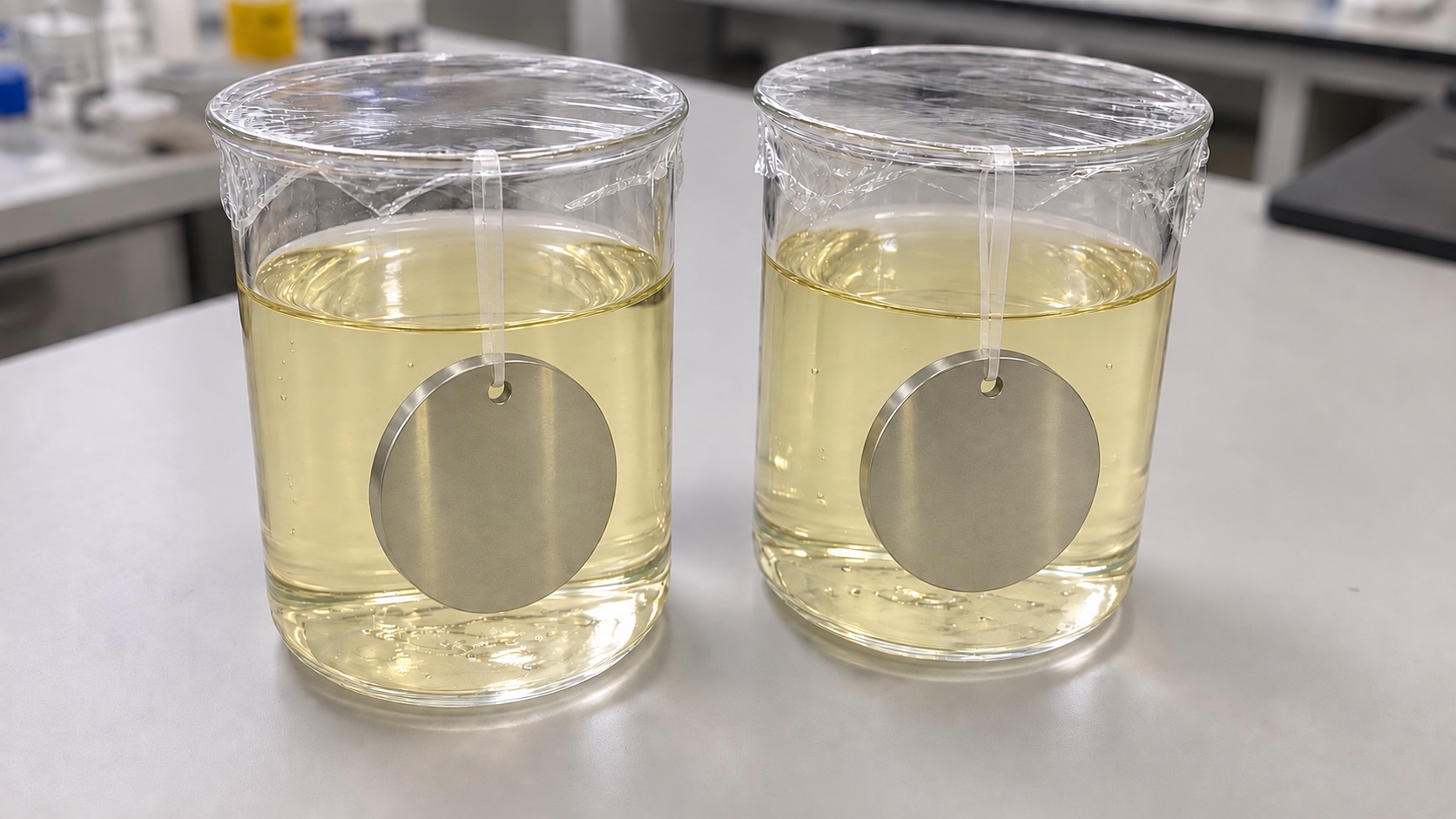
Hydrochloric acid full immersion & hanging method
Clear flat straps pass through the hanging holes and specimens are fully immersed in the test solution in beakers. Both beaker mouths use the same clear sealing film; the illustration shows the immersion setup before temperature control in the water bath.
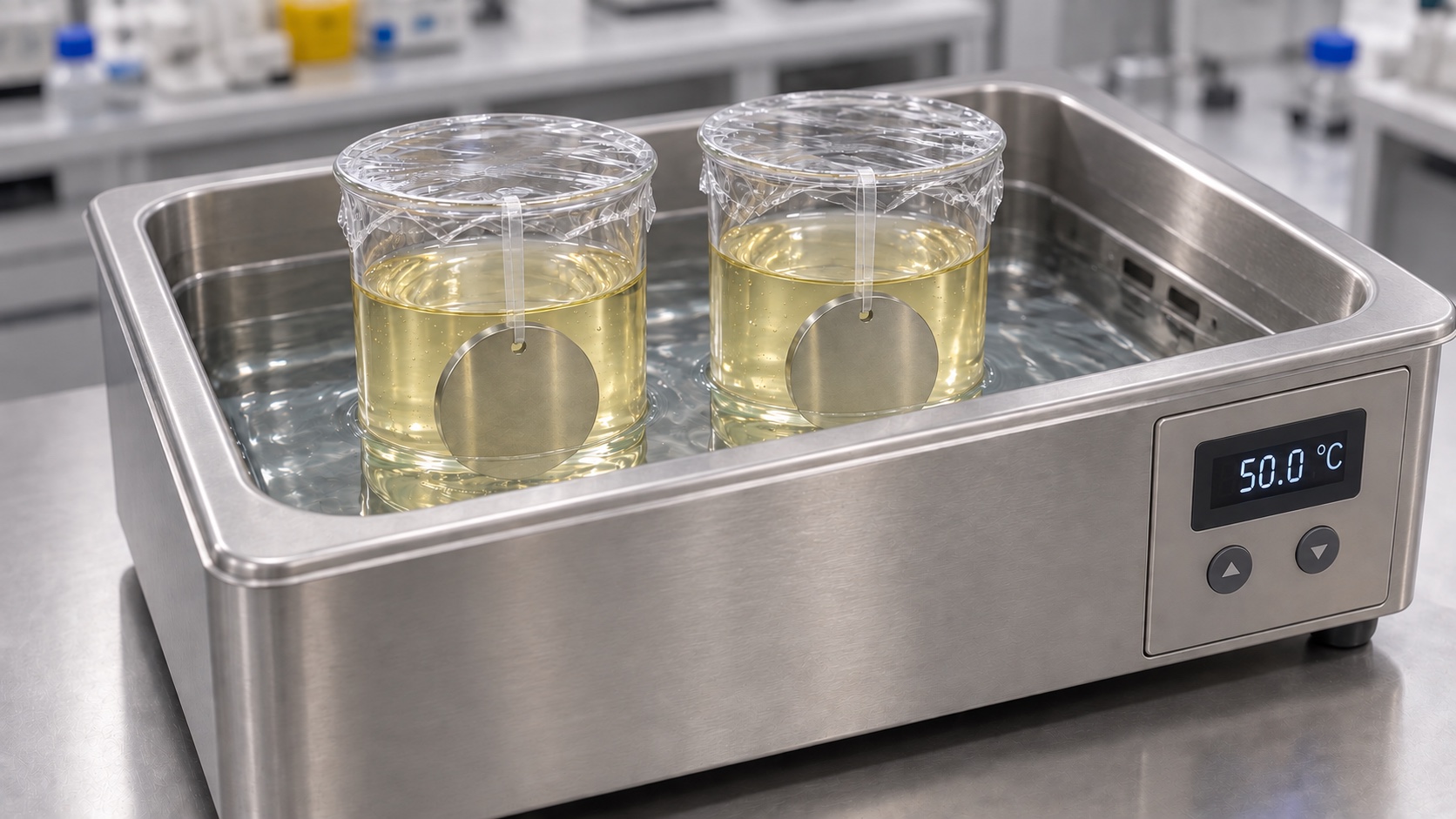
Temperature controlled by thermostatic water bath
The same film-covered beakers are placed in one water bath with the same clear flat straps. The panel is shown set to 50℃, corresponding to the 24-hour full immersion test; actual test solution temperature is subject to temperature records.
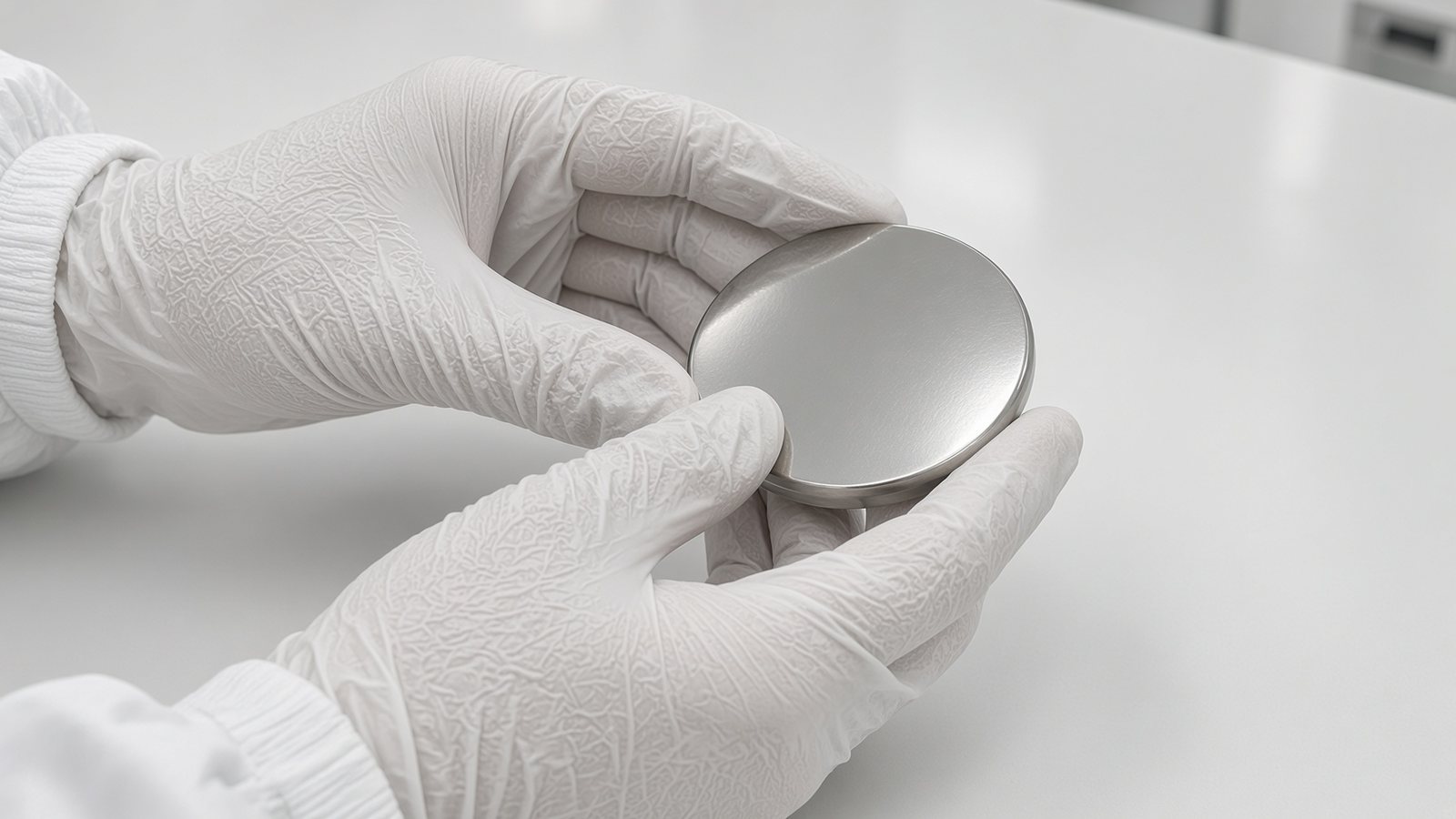
Continuous bright silver coating
Shows the working surface in a continuous, intact state with no obvious blistering, large-area discoloration or peeling. The case coating thickness is 25–28 μm.
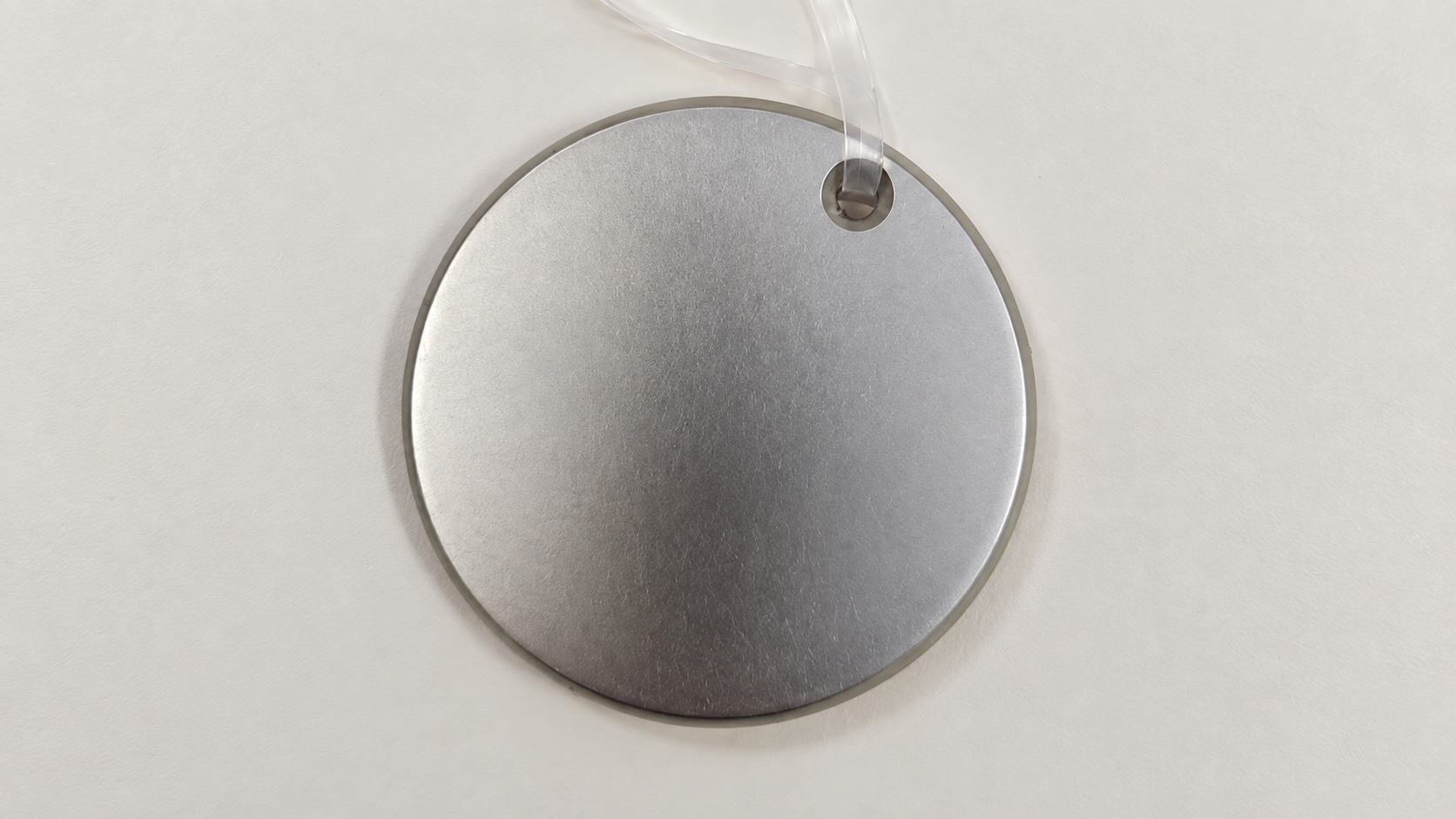
Specimen appearance after 54 hours
Background and composition compiled from the supplementary post-test photo. The round hole at the top of the specimen is the hanging hole; the clear hanging line and silver-gray working surface are retained.
Figures 1–3 illustrate the process and working surface; Figure 4 is an AI-arranged presentation based on the supplementary real photo after 54 hours, not an unprocessed original test photo. The images explain the process and appearance; test conclusions are subject to original records.
See other inspection requirementsThickness, phosphorus content, adhesion, porosity & hardness
| Thickness | Inspection requirements per drawingThe 25–28 μm on this page is only the original case thickness record. The source lists micrometer, microscopic and X-ray methods; X-ray thickness measurement corresponds to ASTM B568. |
|---|---|
| Surface roughness | Per drawing requirements, measured with a roughness testerSource lists ASME B46.1; Ra / Rz limits per drawing. |
| Phosphorus content | 10–12 wt%, measured by EDSSource lists ISO 4527; this is the required range, not a new test certificate. |
| Adhesion | Adhesion tested under agreed thermal shock conditionsSource lists ASTM B571; number of thermal shocks, soaking, cooling and observation methods must follow the project process documents. |
| Porosity | No red spots should be observedSource lists ISO 4527; complete test conditions follow the process documents. |
| Microhardness | 400–525 HK, 100 g loadSource lists ASTM B578; HK is Knoop hardness and is not the same as HV. |
| Hydrochloric acid atmosphere exposure | Controlled room-temperature environment, 24 h screening and 22-day continuous exposureThe project inspection requirement is no blistering, no pitting and no discoloration; this lists the requirement and does not mean the 22-day exposure test has been passed. |
The above are excerpts of project inspection requirements and do not mean every item has been measured and passed. Test results and acceptance conclusions are subject to the corresponding original records.
03 / Parameter comparison
A data comparison, not a general capability promise
Each figure applies only to the listed process and test conditions. Make-up ratio, pH, temperature and replenishment system must be used together; hardness, deposition rate and salt spray data of different formulations cannot be applied to one another.
On narrow screens, swipe left and right to see each product's parameters →
| Comparison item | High-P continuous type | High-P functional type | High-P corrosion-resistant type | High-P adjusted type |
|---|---|---|---|---|
| Coating phosphorus content | High-P specificationConfirmed per process composition requirements | 10.6%–12%mass fraction | High-P specificationConfirmed per process composition requirements | 10.5%measured under specified beaker conditions¹ |
| Deposition rate | 12±2 μm/hFresh bath, 87℃, pH 4.80±0.10 | 6–12 μm/h88℃、pH 4.9 | 10±2 μm/hFresh bath, 86℃, pH 4.50±0.10 | 12.7 μm/h1 L beaker, 86℃, no replenishment¹; not a continuous-production rate |
| Hardness data | Confirmed per this product's data and test conditions | As-plated approx. 500 HV approx. 950 HV after 400℃ × 1 hApplies only to the high-P functional type | Confirmed per this product's data and test conditions | Verified separately per the high-P adjustment scheme |
| Salt spray data | No 1000 h commitmentVerified per this product and specific workpiece conditions | ASTM B117, 1000 hData value under specific conditions in the instructions; substrate, thickness, pretreatment and judging criteria must be checked; not a uniform guarantee | No 1000 h commitmentVerified per this product and specific workpiece conditions | Salt spray data of other products is not applied |
| Operating temperature | 85–95℃ | 82–88℃typical 87℃ | 85–94℃ | 86℃ measuredSingle beaker verification condition; production range confirmed per process documents |
| pH | 4.80±0.10Operating value; adjust after make-up | 4.5–5.2typical 4.9; 5.2 for aluminum parts | 4.50±0.10 | 4.85High-P test value |
| Bath nickel concentration² | 24.0±2 g/Lnickel sulfate hexahydrate | 5.5–6.5 g/Lmetallic nickel; typical 6.0 g/L | 20.0±2 g/Lnickel sulfate hexahydrate | 22.5±2 g/LReference nickel sulfate hexahydrate value of the base bath |
| Make-up component amounts³ | Reducing-complexing solution: 140 mL/L Nickel salt solution: 60 mL/LMake-up components specific to this product |
Nickel salt additive: 60 mL/L Make-up additive: 150 mL/LMake-up components specific to this product |
Reducing agent solution: 200 mL/L Nickel salt solution: 50 mL/LMake-up components specific to this product |
Reducing-complexing solution: 140 mL/L Nickel salt solution: 50 mL/LHigh-P reference ratio |
| Replenishment system | Nickel salt solution + reducing-complexing solutionThe latter is replenished at 1.1× the former | Nickel salt + reducing agentReplenished by analysis of metallic nickel consumption | Nickel salt + reducing agentEqual replenishment per this product's analysis rules | Nickel salt + reducing agentBase system reference; maintaining high P needs rechecking |
- The 10.5% phosphorus content and 12.7 μm/h rate of the high-P adjusted type correspond to the same test group with reducing-complexing solution 140 mL/L, nickel salt solution 50 mL/L, pH 4.85, 86℃, 1 L beaker and no replenishment. 12.7 μm/h is not a continuous-production rate; rates at different temperatures and bath ages cannot be used for direct ranking.
- Nickel sulfate hexahydrate (NiSO₄·6H₂O) and metallic nickel are different concentration bases, so the values in the table cannot be compared directly; the nickel salt concentration of the high-P adjusted type comes from the base bath instructions and is not an independent conclusion of the high-P test.
- Make-up amounts are per liter of final working solution, topped up with water to total volume; each product's components are independent. The table is a selection reference; actual bath make-up and replenishment should follow the corresponding complete process documents.
04 / Application selection
Narrow the selection by your needs.
First define the key performance, then look at production line conditions. Below are selection directions compiled from existing data; final confirmation is by trial plating on actual workpieces.
Need clear coating performance data
Focus on phosphorus content, hardness, non-magnetic properties or subsequent soldering requirements.
Phosphorus content and heat-treated hardness data are available; corrosion tests are agreed according to actual substrate, thickness and environment, and specific usage requirements are verified.
Emphasis on corrosion resistance and continuous production management
Balancing functional coating, bath analysis and daily replenishment.
Both are positioned as high-P but differ in operating pH, nickel salt concentration and replenishment components; choose according to existing production line conditions.
Evaluate a high-P process using a standard Ni-P base bath
Evaluate a standard Ni-P coating by adjusting make-up ratio and temperature.
Start from the beaker verification conditions and focus on rechecking phosphorus content, rate and performance after scale-up and continuous replenishment.
05 / High-P adjustment scheme
High-P adjusted type · make-up reference
The following conditions apply only to the standard Ni-P high-P scheme of the high-P adjusted type. The make-up ratio from the high-P verification data is used, with test conditions retained.
| Reducing-complexing make-up solutionreducing agent, complexing agent, stabilizer | 140 mL/LAmount recommended in the high-P data |
|---|---|
| Nickel salt make-up solutionnickel salt, complexing agent | 50 mL/LMatched with the above reducing-complexing solution amount |
| pH | 4.85Corresponding test value |
| Temperature | 86℃ (measured condition)The data recommends keeping below 86℃; the full temperature window still needs verification |
| Phosphorus content / deposition rate | 10.5% / 12.7 μm/hSame-group results at 86℃, 1 L beaker, no replenishment; 12.7 μm/h is not a continuous-production rate |
| Make-up water | Top up to total working volumeMix thoroughly after preparation; measure pH and concentration |
After increasing the reducing-complexing solution amount, make-up pH may be high; the data recommends adjusting with dilute sulfuric acid. Phosphorus content was measured by wavelength-dispersive X-ray fluorescence, and rate by the weight conversion method.
After continuous replenishment, the ability to maintain high P must still be confirmed.
Results in the high-P data come from beaker tests without replenishment, and note that phosphorus content may drop after replenishment. Before mass production, phosphorus content, rate and coating performance under actual load, bath age and replenishment conditions should be verified.
Daily management referenceExpand to see base bath concentration, replenishment and monitoring points
The following comes from the base bath instructions for process confirmation; continuous operating conditions after high-P adjustment require separate verification.
Nickel salt concentration
The base bath reference value is nickel sulfate hexahydrate (NiSO₄·6H₂O) 22.5±2 g/L. This is a nickel salt concentration and cannot be used as a metallic nickel concentration.
Replenishment components
The base system replenishes the nickel salt component and reducing agent component separately. Replenishment amounts are determined by analysis results, with pH and coating phosphorus content checked at the same time.
Process records
Record temperature, pH, concentration and bath age; sample at make-up, replenishment and different production stages to check rate, phosphorus content and coating quality on actual workpieces.
06 / FAQ
Understand product differences, then decide on a solution.
Why must parameters be kept separate even within the high-P direction?
Each process uses independent chemical components, make-up ratios and replenishment methods, and coating performance and test conditions also differ. The operating pH of the high-P continuous type is 4.80±0.10 and of the high-P corrosion-resistant type 4.50±0.10; the high-P adjusted type uses separate high-P test conditions. One data set cannot be shared.
What is the difference between the high-P continuous type and the high-P corrosion-resistant type?
The high-P continuous type obtains high P by raising the make-up ratio, using reducing-complexing and nickel salt make-up solutions, with an operating nickel sulfate hexahydrate concentration of 24.0±2 g/L. The high-P corrosion-resistant type is clearly positioned as high-P and highly corrosion-resistant, with a lead-free formulation using separate reducing agent and nickel salt make-up solutions at an operating concentration of 20.0±2 g/L. Both support continuous management, but neither can be judged better by deposition rate alone.
Why are the high-P adjusted type's parameters marked as beaker tests?
The provided high-P report used a 1 L beaker at 86℃ without replenishment, obtaining 10.5% phosphorus and a rate of 12.7 μm/h. This rate is not a continuous-production rate. The report notes that phosphorus may drop after replenishment, so performance under continuous replenishment must still be confirmed before mass production.
Special functions & substrates
See electroless systems for other uses.
Ni-P-W for thin-film resistors →
Neutral low-temperature electroless nickel for glass & ceramics →
Hand your requirements to AUTRA engineers
Provide the substrate, target performance and quantity, or your existing tanks and production conditions, and an engineer will confirm the applicable solution.