Nickel-boron alloy · electroless deposition
Nickel-boronNi–B
Precision surfaces that combine
hardness and solderability.
From electronic connections to mechanical fits, a functional coating made of nickel and boron. Choose the right surface treatment for your parts around wear resistance, soldering and subsequent gold plating needs.
Low-boron Ni-B Instruction parameters [2]
- As-deposited hardness
- >750 HV
- Coating boron content
- 0.5–1.5 %
- Bath operating temperature
- 60–65 °C
Coating without heat treatment
Nickel content 98.5–99.5%
Dimethylamine borane reduction system
01 / PROPERTIES
A nickel-based alloy surface
made for function.
Ni-B is deposited by chemical reduction on properly pretreated and activated surfaces. Boron content, bath system and heat treatment conditions together affect coating structure and final performance. [2][4]
High as-plated hardness
The low-boron Ni-B instructions list as-deposited hardness above 750 HV, suitable for selection for parts with surface hardness and wear resistance needs.
See the corresponding productEmphasis on solderability
Low-boron Ni-B can be used in surface systems where soldering performance matters. The corresponding instructions emphasize solderability; actual solder, storage and aging conditions must be verified together.
Instruction basis [2]Wear resistance & sliding
For gears, shafts, mating surfaces and similar applications. Hardness, friction pair, load and lubrication state should be considered together, with wear performance evaluated by condition-specific tests.
See research dataPrecision coverage & subsequent gold plating
Electroless deposition suits evaluating coverage and thickness control on complex shapes. Electronics applications can also evaluate the adhesion, contact and soldering performance of the Ni-B underlayer and gold layer.
Application data [1]02 / APPLICATIONS
From electronic assemblies to precision parts.
Understand Ni-B application directions in light of part functional needs. The images below are application illustrations and are not a basis for coating inspection of specific workpieces. [1]
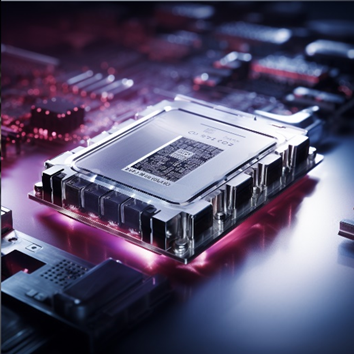
Electronic & semiconductor assemblies
Evaluate Ni-B process compatibility around metallization, soldering and subsequent coating needs of electronic parts.
Focus: adhesion · solderability · thermal cycling
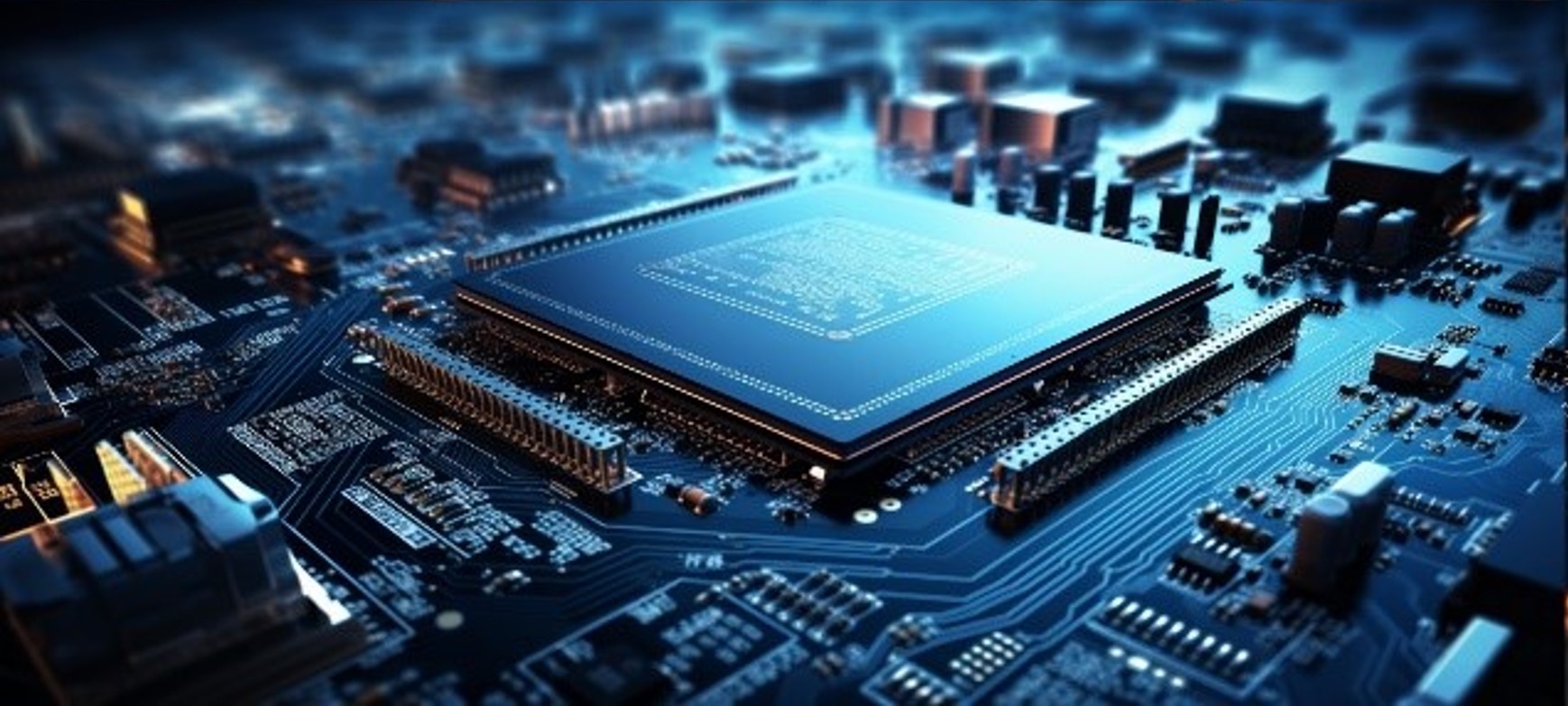
Circuit boards & connection parts
Evaluation can target connectors and subsequent gold plating structures, confirming electrical performance with the actual contact form.
Focus: contact resistance · gold adhesion · thickness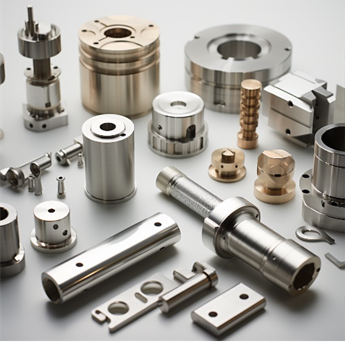
Mechanical fits & wear parts
For gears, shafts and other wear parts, the coating solution is determined by contact load, motion and dimensional tolerances.
Focus: wear · sliding · critical dimensionsSpecial substrates The technical data lists non-metallic application directions such as ceramics and LCP; pretreatment, activation and adhesion must be verified for the specific material. The low-boron Ni-B instructions state that catalytic-poison metals such as zinc, cadmium, antimony, tin, lead and solder are not suitable. [2]
03 / PRODUCT DATA
From coating specifications to bath-age performance.
The low-boron Ni-B formulation system and operating parameters are shown, plus a bath-age test from a separate Ni-B system to help understand changes over the bath's life. Each data set cites its own source.
Neutral system · Ni-B electroless bath
Low-boron Ni-B
Balancing as-plated hardness and solderability
A neutral electroless nickel bath using dimethylamine borane (DMAB) as the reducing agent. Suitable for evaluating solderability, wear resistance and subsequent surface treatment within one process.
Data from pp.1–2 of the instructions. Hardness is the as-deposited reference value for the corresponding product; workpiece acceptance should also agree on test load, thickness and measurement points, and this value is not used for the heat-treated state. [2]
| Item | Data & conditions |
|---|---|
| As-deposited hardness | >750 HVas-plated value listed in the instructions |
| Operating temperature | 60–65°C |
| pH | 6.80 ± 0.10measured at make-up, 25.0 ± 1°C |
| Deposition rate | 6 ± 1 μm/hfresh bath, 60°C |
| Nickel sulfate concentration | 30 ± 3 g/LNiSO₄·6H₂O concentration, not metallic nickel concentration |
| Bath load ratio V/A | 30–35 mL/cm²bath volume / plated workpiece surface area |
Separate technical data · bath-age test
Bath life test
Focus on performance over the whole service cycle
In separate technical data for another Ni-B system (December 2024 rev.1), hardness over 0–3 MTO is about 750 HV; meanwhile, deposition rate gradually decreases and internal stress shifts from tensile to compressive. [3]
Roughly stable within 0–3 MTO
Decreases as the test cycle increases
Must be evaluated with dimensional, adhesion and usage requirements
The above are approximate readings from the original chart to illustrate trends, not guaranteed values or production control ranges. MTO stands for metal turnover and indicates the extent of bath use.
See test conditions & bath-age data
Common conditions: 3 L tank, manual analysis and replenishment, pH 6.60, nickel sulfate concentration control value 24 g/L, temperature 60°C.
Swipe left and right to see the full 0–3 MTO data →
| Item / MTO | 0 | 1 | 2 | 3 |
|---|---|---|---|---|
| Rate (μm/h) | ≈7 | ≈6 | ≈4 | ≈3 |
| Internal stress (MPa) | ≈+110 | ≈+70 | ≈+35 | ≈−30 |
| Hardness (HV) | About 750 at each point, rising slightly | |||
- Deposition rate: SPCC specimens, plated for 60 minutes, by weight conversion with a coating density of 8.6.
- Internal stress: copper alloy specimens, coating thickness 3 μm; positive values are tensile, negative compressive.
- Hardness: SPCC specimens, coating thickness 20 μm, test force 100 g, micro-Vickers hardness tester.
This chart is only for observing the bath-age trend of the samples shown, not for statistical significance comparison. The test belongs to another Ni-B system and cannot be cross-applied with the composition, operating conditions or acceptance parameters of the low-boron type above.
04 / RESEARCH NOTES
Put properties back in their test conditions.
External sources further explain that Ni-B performance depends on formulation, boron content, heat treatment and friction conditions. Below are examples from public sources and do not represent performance specifications of the products or test systems on this page.
Boron content varies,
and so does performance.
Application data from Boron Specialties gives a boron range of 0.2–4% for DMAB-process coatings, with a common target of 1–1.5%. The low-boron Ni-B on this page uses 0.5–1.5% per its instructions.
Boron content relates to process conditions; low-boron DMAB systems cannot be equated directly with high-boron research systems.
Boron Specialties · application data [4]Crystallization and boride precipitation
can further increase hardness.
In a 2023 study, as-plated hardness was 933 ± 62 HV0.05, and 1277 ± 181 HV0.05 after heat treatment at 300°C × 4 h.
About 4 wt% B, sodium borohydride system; about 15 μm coating on low-carbon steel; heat treatment atmosphere 95% Ar / 5% H₂.
Coatings · 2023 [5]Higher hardness
still needs wear evaluation.
In a 2024 set of Ni-B tests, hardness increased after heat treatment at 350°C × 3 h, but the friction coefficient rose from about 0.25 to about 0.35 and wear performance actually declined.
7.80 wt% B, lead-containing research system; Ti-6Al-4V substrate; Al₂O₃ ball, 10 N; both air and nitrogen heat-treated groups about 0.35.
Original friction & wear study · 2024 [6]SELECTION / FAQ
When selecting, confirm these questions first.
First clarify the substrate and actual function, then determine coating system, thickness and verification method.
What is the difference between Ni-B, Ni-P-B and boron nitride composite coatings?
Ni-B on this page is an alloy coating of nickel and boron; Ni-P-B is a nickel-based alloy containing both phosphorus and boron; Ni-P+BN incorporates boron nitride particles into a Ni-P coating. Their compositions and processes differ, so hardness, lubrication and corrosion data cannot be shared among them.
Can hardness values of different Ni-B systems be applied to one another?
Each system is selected per its own technical data and test conditions: the as-deposited hardness reference for low-boron Ni-B is >750 HV; the bath-age test system's charted value is about 750 HV. The two data sets correspond to their own baths and specimens and cannot serve as a unified acceptance criterion for different Ni-B systems. [2][3]
Can the coating guarantee low friction, lubrication-free operation or a fixed thickness tolerance?
Friction and wear must be evaluated with the friction pair, load, speed, lubrication and environment; a single friction coefficient cannot be applied to all Ni-B workpieces. Specific projects should define drawing measurement points, target thickness, allowable deviation and measurement method, and confirm with samples. [1][6]
What information should I provide for conductivity, gold plating or soldering needs?
We recommend providing the substrate and current surface condition, drawings and target thickness, subsequent coating structure, solder and temperature profile, contact method and resistance requirements, and storage and aging conditions. Conductivity, gold adhesion and solderability should each be verified separately.
LET’S TALK ABOUT YOUR APPLICATION
From one sample, set the process direction.
Provide the substrate, drawings, target thickness and service conditions to discuss a suitable Ni-B solution.
Source
Product parameters prioritize the corresponding data; external literature is for technical background only. Data checked: 2026-09-19.
- [1]
AUTRA technical data | Electroless nickel — nickel-boron Ni-B. Source of the application text, three body images and the Ni-B section cover.
- [2]
Low-boron Ni-B instruction data: text pp.1–2 (PDF pp.3–4). Coating composition, as-deposited hardness, solderability and operating parameters.
- [3]
Ni-B bath-age test data, rev.1, December 2024: PDF pp.2–4. Bath-age tests of deposition rate, internal stress and hardness.
- [4]
Boron Specialties | DMAB application data. Boron content range of DMAB coatings.
- [5]
Vitry et al. | Coatings 2023, 13(1), 1. Heat treatment and performance data for an approx. 4 wt% B research system.
- [6]
Chinese Journal of Mechanical Engineering · 2024. Ni-B / Ti-6Al-4V reciprocating friction study; Al₂O₃ ball diameter 4 mm, load 10 N, stroke 3 mm, speed 2 mm/s, test 60 min.
Hand your requirements to AUTRA engineers
Provide the substrate, target performance and quantity, or your existing tanks and production conditions, and an engineer will confirm the applicable solution.